Why San Francisco’s Cable Cars Are a Perfect Model for Zero Trust Security
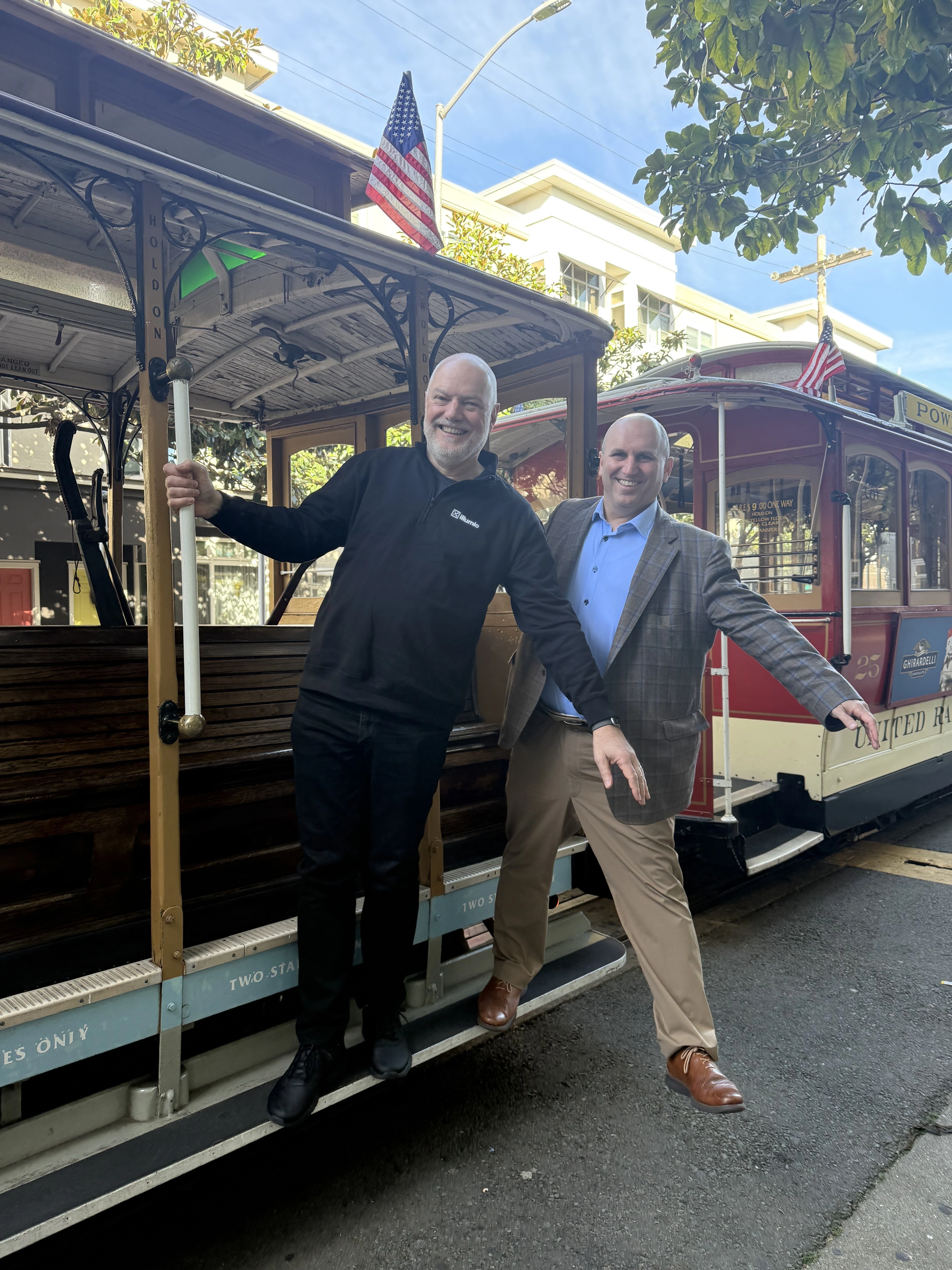
A few months ago, I found myself standing on the running board of a cable car as it climbed out of downtown San Francisco.
The bell rang at every intersection, the cable groaned beneath the street, and the car kept climbing along the same worn track it has followed for well over a century. There was no version of the ride where it suddenly veered off toward the water or wandered down a side street just to see what was there.
Somewhere near the top of the hill, with the wind coming off the bay and the whole grid of streets laid out below, it hit me that I was looking at a working model of Zero Trust.
Every car moves along a defined pathway, and every stop is known in advance. While cars on a line are loosely connected by a shared cable, each has its own grip and brake, so one gripman can stop that car without disrupting the others. If one car needs to brake somewhere on the line, the rest of the system keeps running without missing a beat, because isolation was engineered into it from the start.
That’s exactly the model security teams need to be building toward with their own networks. When you have defined pathways, real visibility, and containment that’s designed in from day one, a single breach never has the chance to become a full-blown catastrophe.
Visibility is the first step
You can’t protect what you can’t see.
Riding above the city with the whole grid of streets visible at once made that obvious to me. That view in map form is exactly what lets you make a smart decision about where to go.
Security teams need that same vantage point over their own networks, knowing what’s talking to what and where the real exposure sits. Without it you’re essentially guessing, and guessing has never been a strategy.
Seeing risk clearly, before anything goes wrong, is the most critical step in building a real Zero Trust posture.
Control network pathways before attackers do
Zero Trust is about defining the paths that are allowed and shutting the rest down. A cable car can’t decide to leave its track. It goes where the policy allows it to go and nowhere else.
Apply that same thinking to your infrastructure. When you set strict, defined pathways between systems, you remove the openings attackers rely on. They can’t move freely through your environment if there’s nowhere for them to go.
Microsegmentation gives you that control as a foundational part of any Zero Trust strategy. It draws the tracks, sets the rules, and takes away the wide-open pathways that adversaries count on travelling across to your critical assets.
Breach containment turns an incident into a non-event
At one point on the ride, the gripman ahead of us released the cable and dropped the brake to bring our car to a stop. What struck me was how contained that action was.
He didn’t have to stop the whole cable system running under the street just to slow our car. The mechanism let him isolate it and manage the stop on its own. Meanwhile, every other car on the line kept moving without any idea anything had happened.
That’s precisely what strong segmentation does for your enterprise. It ensures a single breach can’t burn down your entire environment, because everything around it stays isolated by design.
This is the assume breach mindset in action. Plan for the incident before it happens, so your team can contain it fast and keep the damage from reaching anything else.
Don’t wait for a breach to derail your network
Every organization should expect a breach eventually. The real question is how fast it spreads once an attacker gets in.
Attackers don’t need to compromise your entire network to cause real damage. They need one open pathway and enough time to move.
Teams that rely on flat, open networks are betting on prevention alone, and prevention alone isn’t holding up.
The cable car system in San Francisco proves that restriction, visibility, and containment can work together at scale, every single day, carrying passengers safely across a complex, hilly city.
Your network can run the same way.
The next time you’re in San Francisco, take a ride on the cable cars. Watch how the system works. Then ask yourself if your network is built with the same structure.